68°F
Patchy Fog
Data: NOAA/National Weather Service. Forecast updated Oct 16, 2026, 8:15 AM UTC. Discussion issued Oct 16, 2026, 5:28 AM UTC.
Air Quality Index: 59 (Moderate)
No rain expected in the next 2 hours.
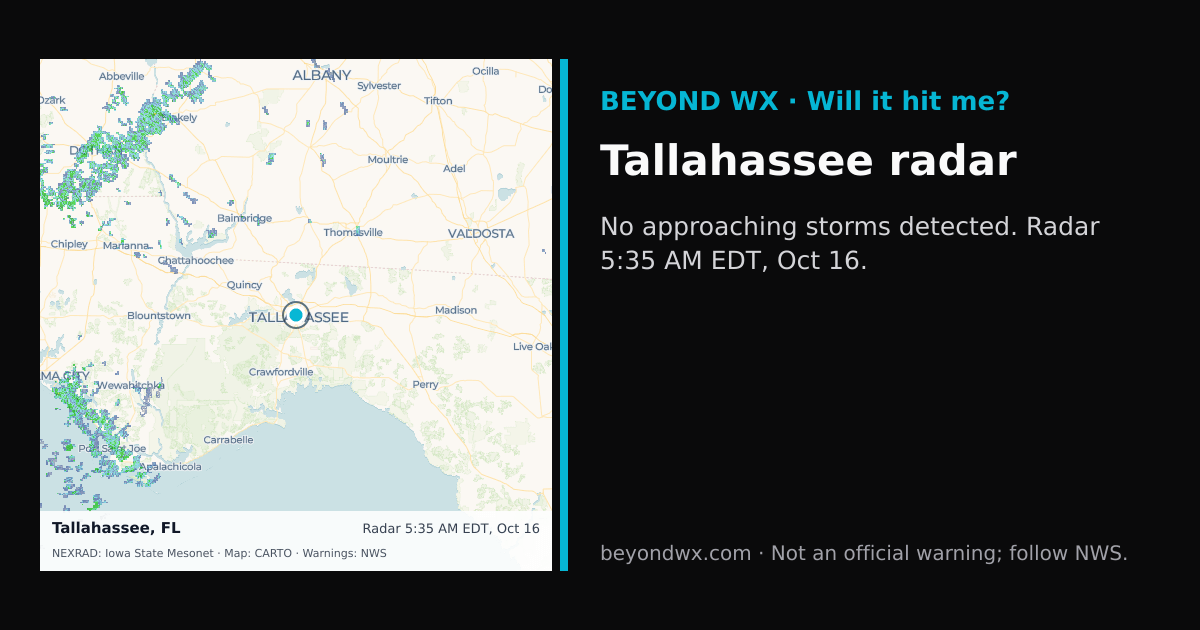
No storms on track toward Tallahassee right now.
Hourly NWS forecast and radar storm motion. Times are local. Not an official warning; follow NWS.
Share: storm card image · live radar
Tallahassee, FL, has a humid subtropical climate, characterized by hot, humid summers and mild to cool winters. This climate type results in a diverse range of weather conditions throughout the year, with distinct seasonal variations. The influence of the Gulf of Mexico plays a significant role in moderating temperatures and contributing to the region's humidity.
In Tallahassee, summer temperatures typically range from highs in the low 90s°F to lows around 70°F. Winters are much milder, with average highs in the low 60s°F and lows in the low 40s°F. Spring and fall serve as transitional periods with more moderate temperatures, often ranging from the mid-60s°F to mid-80s°F, providing a comfortable climate before the onset of summer heat or winter chill.
The city receives an average annual rainfall of about 60 inches, with the wettest months typically occurring from June to September due to the influence of tropical systems and afternoon thunderstorms. July is often the wettest month, whereas October tends to be the driest. Snow is a rare occurrence in Tallahassee, with occasional light dustings possible in particularly cold winters.
Tallahassee is susceptible to tropical storms and hurricanes, especially during the Atlantic hurricane season from June to November. The city's proximity to the Gulf Coast makes it vulnerable to these systems, which can bring heavy rainfall, strong winds, and severe weather. Additionally, the region can occasionally experience tornado activity, often associated with severe thunderstorms or hurricane remnants.
Situated in the Florida Panhandle, Tallahassee lies at an elevation of approximately 203 feet above sea level, which is relatively higher compared to much of the rest of the state. This elevation, combined with its inland location, can lead to slightly cooler temperatures compared to coastal areas, especially during the night. The surrounding pine forests and rolling hills also influence local weather patterns, contributing to the area's unique climate characteristics.